Winnipeg media was captivated by the subdivision and rezoning of the Royalwood Phase 2 subdivision in 2002. What could possibly trump the image of retiree Save Our Seine board members, bravely standing in front of a bulldozer in an endangered forest, surrounded by illegally felled trees, being yelled at by a land development manager (a man that the developer later named one of its streets after)? Newly branded as the Bois-des-esprits, the Royalwood forest was front page news in the early “oughts”. With the help of both the City and the Province, and let’s not forget the public, the B-D-E forest was eventually protected from destruction.
But what of the forthcoming “Royalwood Phase 3” subdivisions in 2026 and beyond? Have you seen any media articles about that lately? No. Does that then mean that there is nothing to worry about? That all of the riparian forest is protected and safe? No.
Years ago, I asked the City if it considered the Royalwood forest south of Warde Avenue to be part of the Bois-des-esprits forest. Their answer was a hard no. The B-D-E was the B-D-E. The boundary was a fixed one.
In the real world, branding is everything. Twenty-five years after the fact the B-D-E brand still sells houses in built Royalwood, even though the last empty lot on John Bruce Road East is only up for sale this year. Should SOS and the public demand that the B-D-E border be extended southwards in 2026?
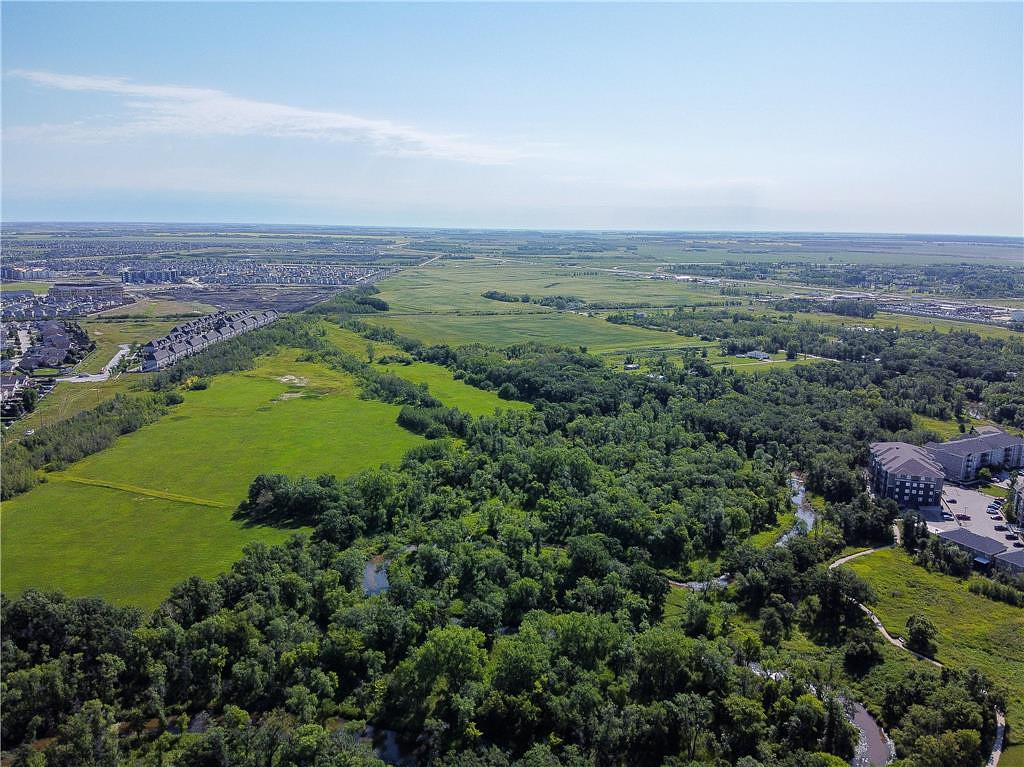
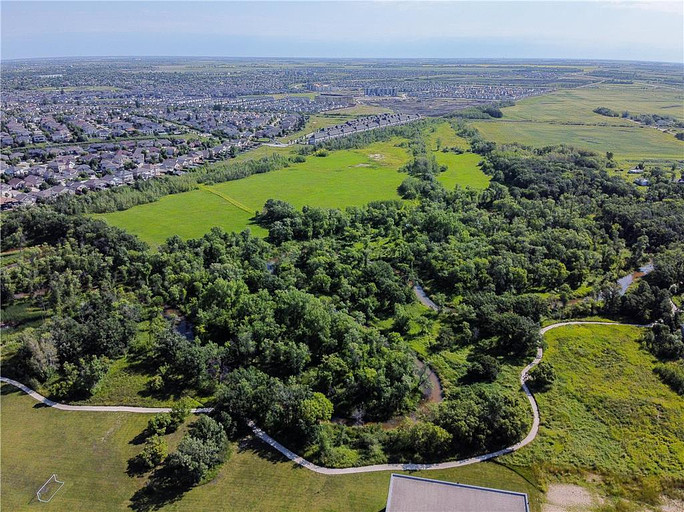
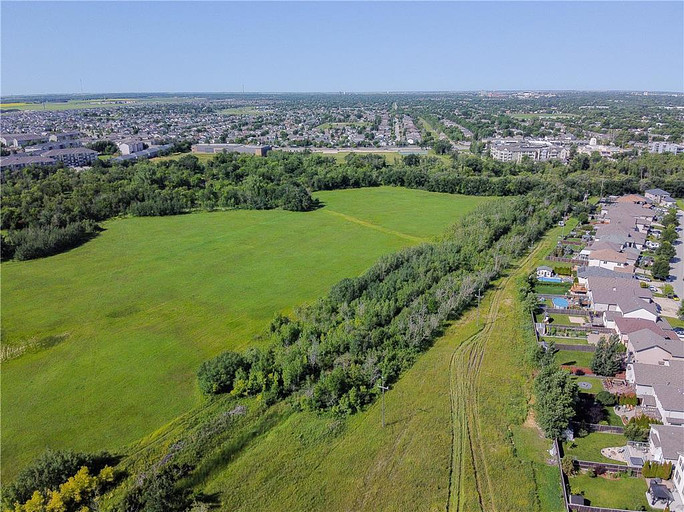
In South Royalwood there are wooded river valleys, leafy coulees, overgrown roadway right-of-ways, long treed wind breaks, but there is no vast signature forest. No equivalent to the Sumka Forest (aka Vermette Forest), nor the Lemay Forest. From a drone the area looks treed enough to be called a proper river forest. But is this top shelf, is it the B-D-E? The City says that it isn’t.
The good news is that a good number of the trees shown in drone shots are in the Seine River floodplain, legally protected from future development. A parks dedication, either 10% of developable land, or 8% plus improvement costs, saves even more of the trees plus room for an active-transportation pathway. But what about the trees NOT on the riverbank? What about the trees that radiate out from the river valley greenway to the CPKC Emerson line to the east? Will they be saved as well?
Bare land in South Royalwood is very expensive, currently being sold for up to $300K per acre. Developers need to recoup that money, plus their share of the high costs for sewers, water, roads and for the almost mythical Warde Avenue Bridge. Should a developer be expected to save trees a half-mile from the river? Would a SOS member stand in front of a tree right beside the CPKC Emerson line? Are wildlife corridors a hill that the public would be willing to die upon?
In 2002 the B-D-E had a friendly mayor and city planner willing to put up public money for sensitive lands acquisition. The Riel Community Committee was supportive. The premier put up provincial money. The public, and sympathetic philanthropists, put up their own money. Citizens sent postcards and signed petitions. The developer allowed time extensions. It took a lot of work, by a lot of people, but the B-D-E forest was eventually protected in 2002-2004.
Have we learned a lot more about protecting our forests in 2026? The recent campaigns to save the Sumka and Lemay forests tell us, perhaps, not as much as we’d like. What can we do in advance to forgo storm and thunder in South Royalwood? How do we avoid the drama? The City wants to protect at least 100 acres of treed forest. The developers know that river parks help to sell their product. SOS has a board with unrivalled professional and academic qualifications. What will it take to protect this generation’s Bois-des-esprits, and how can we use that knowledge to also protect the Seine River’s Sumka/Vermette forest south of the Perimeter Highway during the next decade?